
 EN
EN
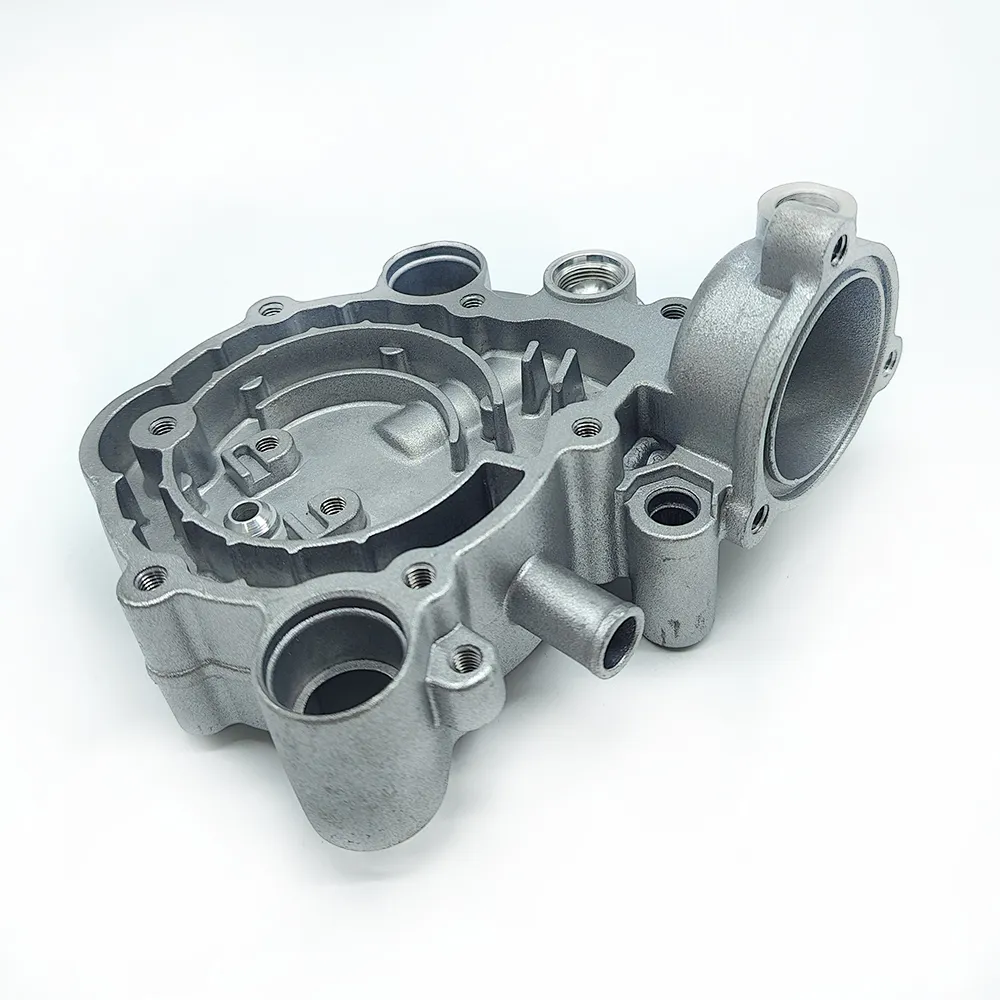
The Role of Casting in Vehicle Manufacturing
Casting for automotive manufacturing is foundational to how modern vehicles are built. From engine blocks and transmission housings to suspension components and structural nodes, casting for automotive applications produces the load-bearing metal parts that define a vehicle performance, safety, and weight. The reason casting for automotive industry applications matters so much is that it can create complex, near-net-shape geometries from high-strength alloys that would be prohibitively expensive or impossible to machine from solid billet. For automotive engineers and sourcing teams, understanding why casting for automotive use is important means understanding the available processes, the material choices, and the mechanical properties, such as isotropic behavior, that make cast parts suitable for demanding road and chassis environments. This guide explains the role of casting for automotive applications and how to evaluate automotive casting suppliers for vehicle programs.
How Casting Creates Complex Automotive Geometries
The primary advantage of casting for automotive components is geometric complexity. A casting can incorporate internal passages, mounting bosses, ribs, and varying wall thicknesses in a single part, which reduces the number of components and assembly steps. Automotive casting achieves this by allowing designers to consolidate multiple machined parts into a single molded component. For an engine block, for example, casting for automotive applications allows coolant channels to be integrated directly into the structure. Machining such a part from a solid billet would waste most of the material and take far longer. Casting also supports near-net-shape production, meaning the part comes out of the mold close to its final dimensions, requiring only secondary machining on critical surfaces. This efficiency is why casting for automotive manufacturing remains the dominant method for producing large and medium-sized metal components despite advances in additive manufacturing and forging. For vehicle components that combine complex internal geometry with high structural loads, casting for automotive engineering offers a balance of design freedom and mechanical performance that competing processes struggle to match.
Casting Processes Used in Automotive Production
Three main casting processes serve the automotive industry. Sand casting uses a sand mold and is suitable for larger parts with lower volume requirements; it is often used for engine blocks and large housings. Investment casting, also called lost-wax casting, produces parts with excellent surface finish and dimensional accuracy, making it suitable for smaller, high-precision components such as turbocharger wheels and valve bodies. Die casting forces molten metal into a steel mold under high pressure and is widely used for high-volume aluminum and zinc components such as gearbox housings and structural brackets. Each automotive casting process offers different trade-offs in terms of cost, tolerance, surface finish, and production volume. Die casting remains the most common automotive casting process for high-volume aluminum parts. Casting for automotive programs often involves selecting the right process based on the part function, production volume, and material requirements. A supplier that offers all three processes, sand casting, investment casting, and die casting, can match the process to the part rather than forcing the part into an available process.
Materials and Isotropic Mechanical Properties
Material selection is central to casting for automotive engineering. The most common casting materials include iron, steel, aluminum, copper, zinc, and magnesium alloys. Iron and steel castings offer high strength and wear resistance for heavily loaded powertrain components. Aluminum castings reduce weight, which is critical for fuel efficiency and electric vehicle range, and they offer good corrosion resistance. Zinc and magnesium alloys serve specialized applications where weight or electromagnetic shielding is a priority. Copper castings appear in heat exchangers and electrical components. The choice of automotive casting material depends on the part function, weight target, and cost budget. A key mechanical advantage of casting for automotive parts is isotropic mechanical properties. Because a casting solidifies from molten metal, its internal structure is more uniform in all directions compared to a forging, which has directional grain flow. This isotropy means a cast part behaves predictably under multi-axial loads, which is essential for suspension and chassis components that see forces from multiple directions during cornering, braking, and road impacts. The comparison table below summarizes common casting materials for automotive applications.
Practical Sourcing Scenario: Casting a Suspension Bracket
Consider an automotive tier-one supplier sourcing a cast suspension bracket for a new vehicle platform. The bracket must support loads from the control arm during cornering and braking, and it must be lightweight to meet the vehicle overall weight target. The engineering team evaluates casting for automotive applications and selects aluminum die casting for its combination of strength, low density, and high-volume capability. The automotive casting supplier offers sand casting, investment casting, and die casting processes, covering iron, steel, aluminum, copper, zinc, and magnesium alloys. The team requests material certificates, dimensional inspection reports, and mechanical property data demonstrating isotropic behavior. Because the supplier maintains a US warehouse established in 2003 to reduce overseas shipping lead times that typically run four to six weeks, prototype and production samples arrive within a predictable window. The supplier also completes the PPAP process in twelve days, allowing the tier-one to validate the casting and move into production without delaying the vehicle launch. This scenario shows how selecting the right casting for automotive process and supplier directly affects program timing and component performance. A supplier with broad material and process coverage gives engineers the flexibility to optimize for weight, strength, and cost simultaneously.
Evaluating Casting Suppliers for Automotive Programs
When evaluating a casting supplier for automotive programs, buyers should look for process coverage, material range, and supply chain infrastructure. A supplier that offers sand casting, investment casting, and die casting can match the process to the part rather than forcing the part into an available process. A broad material range, including iron, steel, aluminum, copper, zinc, and magnesium alloys, gives engineers flexibility in optimizing weight, strength, and cost. Supply chain infrastructure matters as well. A US warehouse that addresses the typical four to six week overseas shipping delay is a significant advantage for North American automotive programs that operate on tight launch schedules. A PPAP turnaround of twelve days, compared to the traditional six weeks, means the supplier can respond to design iterations quickly. Casting for automotive sourcing should also include verification of the supplier quality system, including material certificates, dimensional reports, and mechanical test data. The goal is not just to find a foundry but to find a casting partner whose process maturity matches the demands of automotive production. Casting for automotive applications requires consistent material properties and dimensional accuracy across high-volume runs, so supplier evaluation should emphasize process control and quality documentation. Automotive casting programs demand this level of rigor across every production run.
Q: Why is casting preferred over machining for automotive parts?
A: Casting for automotive parts is preferred because it can produce complex geometries with internal passages and varying wall thicknesses in a single near-net-shape component. Machining the same shape from solid billet would waste material and take far longer, making it impractical for high-volume production. This is why automotive casting remains the dominant method for vehicle structural components.
Q: Which casting process is most common for automotive aluminum parts?
A: Die casting is the most common automotive casting process for aluminum parts because it supports high production volumes, good dimensional accuracy, and excellent surface finish. Sand casting is used for larger or lower-volume parts, and investment casting for high-precision smaller components.
Q: What does isotropic mechanical property mean for automotive castings?
A: Isotropic mechanical properties mean the cast part has uniform strength in all directions, because the metal solidifies from liquid without directional grain flow. This matters for automotive components like suspension and chassis parts that see forces from multiple directions during driving.

