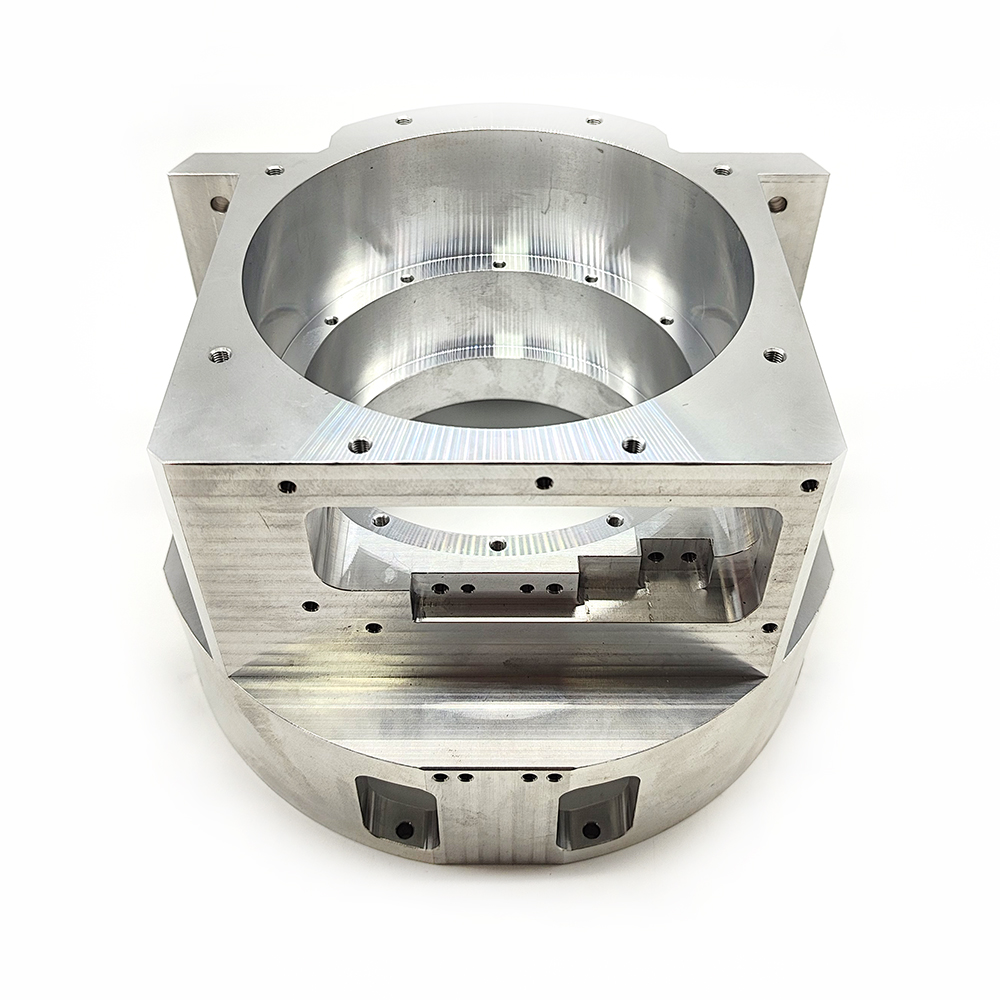
Classification: CNC Machining Products – The Pinnacle of Precision Manufacturing
Page Introduction
In the landscape of modern manufacturing, CNC Machining Products stand as a testament to precision, versatility, and technological excellence. CNC, which stands for Computer Numerical Control, is a subtractive manufacturing process where pre-programmed computer software dictates the movement of factory tools and machinery. This process is used to control a wide range of complex machinery, including mills, lathes, routers, and grinders, to produce highly accurate parts from a solid block of material. The realm of CNC Machining Products encompasses an incredibly diverse array of components, from simple bolts and brackets to intricate aerospace actuators, medical implants, and automotive engine parts. These are not mere commodities; they are engineered solutions where dimensional perfection, material integrity, and flawless surface finish are non-negotiable. The production of CNC Machining Products represents the synergy of digital design and physical execution, transforming raw materials like metals, plastics, and composites into functional, high-performance components. As the demand for complex, robust, and reliable parts grows across advanced industries, CNC Machining Products continue to be the cornerstone of innovation, providing the foundational elements that power technological progress and ensure operational reliability in the most demanding applications.
Key Advantages of CNC Machining Products
The widespread adoption and critical importance of CNC Machining Products are driven by a set of compelling advantages that make them indispensable for prototyping, custom work, and high-value production.
Unrivaled Dimensional Accuracy and Tight Tolerances: The most significant advantage of CNC Machining Products is their exceptional ability to hold extremely tight tolerances, often as precise as ±0.0001 inches (±0.00254 mm). This unparalleled accuracy is achieved through computer-controlled movements that eliminate human error, ensuring that every single CNC Machining Product is a perfect geometric match to its digital blueprint. This is critical for applications in aerospace, medical, and automotive sectors where a minuscule deviation can lead to systemic failure, guaranteeing perfect fit, alignment, and performance in every assembly.
Superior Material Versatility and Integrity: Unlike processes limited to specific material states, CNC Machining Products can be manufactured from an enormous range of materials. This includes virtually all metals—from aluminum and stainless steel to exotic alloys like titanium and Inconel—as well as various engineering plastics, composites, and woods. Furthermore, because the process works from a solid billet or block, the final CNC Machining Product retains the full strength, hardness, and inherent material properties of the raw stock, resulting in components with exceptional structural integrity and performance characteristics.
Exceptional Repeatability and Volume Consistency: Once a CNC program is verified and perfected, it can produce an infinite number of identical parts with unwavering consistency. This makes CNC Machining Products ideal for both medium-volume production runs and scenarios requiring the exact replication of a part. Whether manufacturing ten or ten thousand units, every CNC Machining Product in the batch will be a precise duplicate, facilitating seamless assembly, inventory control, and quality assurance across global supply chains.
Unmatched Design Freedom for Complex Geometries: CNC technology offers incredible design flexibility. Multi-axis CNC machines (3-axis, 4-axis, and 5-axis) can create highly complex and intricate geometries that are impossible to achieve with conventional machining. This allows for the production of CNC Machining Products with complex contours, deep cavities, intricate undercuts, and precisely angled features in a single setup. This capability empowers engineers to design sophisticated, lightweight, and highly optimized components that push the boundaries of innovation.
Rapid Prototyping and Expedited Time-to-Market: The digital nature of CNC machining makes it an excellent solution for rapid prototyping. A digital CAD model can be quickly translated into a physical part without the need for expensive tooling or molds. This allows for the rapid iteration and validation of designs, significantly accelerating the product development cycle. The ability to swiftly produce functional prototypes and end-use CNC Machining Products enables companies to bring superior products to market faster than their competitors.
Core Manufacturing Process & Technological Selling Points
The exceptional quality of CNC Machining Products is a direct result of the advanced capabilities of different CNC processes. Each technology offers unique selling points tailored to specific geometric and tolerance requirements.
1. CNC Milling
CNC Milling involves a rotating multi-point cutting tool that moves along various axes to remove material from a stationary workpiece.
Selling Points:
Versatility in Shape Creation: Ideal for producing a vast range of CNC Machining Products, from simple flat surfaces and pockets to complex 3D contours, molds, and dies.
Multi-Axis Capability: 3-axis, 4-axis, and 5-axis milling machines provide increasing levels of geometric freedom, allowing for the creation of highly complex CNC Machining Products in a single operation, reducing setup time and improving accuracy.
Excellent for Prototypes and Production: Serves as a go-to process for both one-off functional prototypes and medium-volume production runs of CNC Machining Products.
2. CNC Turning
CNC Turning is a process where a workpiece is rotated at high speed while a single-point cutting tool is traversed along its length to remove material and create cylindrical parts.
Selling Points:
High-Performance for Rotational Symmetry: The most efficient and accurate method for producing CNC Machining Products that are radially symmetric, such as shafts, bolts, fittings, and bushings.
Exceptional Surface Finish: Delivers superior surface finishes on cylindrical contours directly from the machine, often reducing or eliminating the need for secondary finishing operations.
High-Speed Production: Modern CNC lathes, especially Swiss-type lathes, are capable of extremely high-speed production of small, precision CNC Machining Products with very tight tolerances.
3. Multi-Axis CNC Machining
This refers to the simultaneous movement of multiple machine axes (beyond the standard three), typically in 4-axis and 5-axis CNC machines.
Selling Points:
Single-Setup Complex Machining: Allows for the complete machining of a CNC Machining Product from all angles in a single setup. This drastically reduces lead times, minimizes handling errors, and achieves higher overall accuracy.
Capability for Complex Contours and Angles: Essential for producing CNC Machining Products with complex curves, angled features, and deep cavities that would be inaccessible with 3-axis machines.
Improved Tool Life and Efficiency: The ability to tilt the workpiece or tool allows for optimal cutting angles, which leads to better chip evacuation, longer tool life, and improved surface finishes on the final CNC Machining Product.
4. CNC Grinding
CNC Grinding uses a rotating abrasive wheel as the cutting tool to achieve extremely high dimensional accuracy and surface finishes on hardened materials.
Selling Points:
Ultra-Tight Tolerances and Finishes: The premier choice for achieving the tightest possible tolerances and the finest surface finishes on CNC Machining Products, often required for precision gears, bearing races, and tooling components.
Ability to Machine Hardened Materials: Capable of efficiently working on materials that are too hard for traditional cutting tools, making it a critical finishing process for heat-treated CNC Machining Products.
Conclusion:
The category of CNC Machining Products is defined by an uncompromising commitment to precision, quality, and technical capability. The choice of the specific CNC process—be it milling for its geometric versatility, turning for its cylindrical perfection, multi-axis for its unparalleled complexity, or grinding for its ultimate precision—is a strategic decision based on the component's design, material, and application requirements. From prototyping to production, CNC Machining Products provide the reliable, high-performance components that form the backbone of advanced technological systems. Investing in high-quality CNC Machining Products is, therefore, an investment in product integrity, innovation, and long-term operational success.


 EN
EN