
 EN
EN
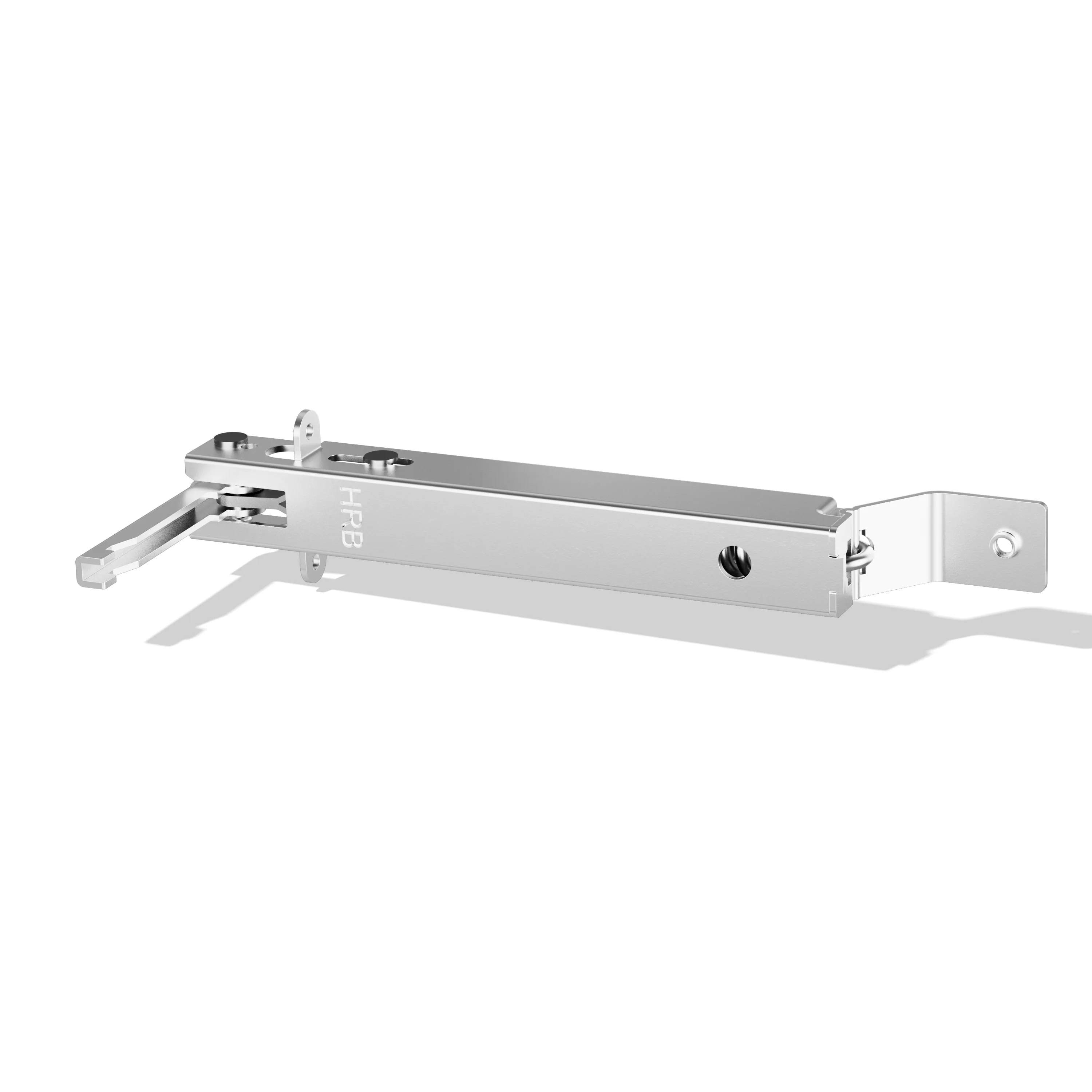
Why Custom Designed Hinges Beat Standard Hinges
A hinge looks like a simple part, but it carries a door every day for years. Standard hinges are produced in bulk with general tolerances, so a stock hinge may fit loosely, wear unevenly, or fail a load requirement that your product has to meet. Custom designed hinges exist to close that gap: the geometry, spring preload, and finish are set from your drawing, and the hinge is built to the load and cycle requirements of your application. Buyers usually move to custom designed hinges when fit, load capacity, or product life becomes a problem with standard parts. If your door assembly shows sag, binding, or early wear, custom designed hinges are often the faster fix than redesigning the frame.
Fit, Load and Life: What Custom Designed Hinges Fix
The three reasons most sourcing teams specify custom designed hinges are fit, load, and service life. Fit starts with the mounting pattern and the gap between the door and the frame. Load is about how much weight the hinge carries during opening and closing, which matters for heavy appliance doors. Life is the number of open-close cycles the hinge survives without losing its spring behavior. Custom designed hinges let you set these three variables at the design stage instead of accepting whatever a standard catalog hinge offers. Custom hinges designed around your door weight and cycle target will behave differently from an off-the-shelf unit, and custom hinge manufacturing starts with the drawing rather than the catalog, so the fit is controlled before the first part is produced, especially for applications in automotive, home appliances, agricultural machinery, or medical devices, where each sector has its own load and environmental demands.
Hinge Quality Control on the Hinge Assembly Line
Hinge quality control is where custom designed hinges show their value in production. On a manual line, inspection is sampled and the result varies from operator to operator. An automated hinge assembly line changes the picture. One European-patented line built in 2025 runs more than 5,000 hinges per day and reports a pass rate above 99.9 percent, against an industry average around 95 percent. Assembly tolerance is held under 0.1 mm. The line checks load capacity, open and close flexibility, and runs a surface defect scan, and it can detect spring preload deviation above 3 percent and burrs larger than 0.03 mm. The same automation consumes roughly 15 percent less energy. For a buyer, these are not marketing figures; they are hinge quality control items you can ask a supplier to document before you approve production of custom hinges.
A Practical Sourcing Scenario: Appliance Door Hinge
Consider an anonymous example from a home appliance program. A manufacturer of ovens was using a standard hinge on the door. In the field, the door sagged after repeated opening, and some units showed a rough edge that scratched the painted frame. The team moved to custom designed hinges with a higher spring preload and a deburred edge. The first batch went through load capacity testing, open-close flexibility testing, and a surface defect scan, and the assembly tolerance was confirmed against the drawing. The custom designed hinges met the load test on the first articles. The new custom hinges also changed the sourcing picture: with a minimum order quantity around 2,500 pieces, the manufacturer could order closer to actual demand instead of committing to 15,000 pieces as many traditional hinge factories require. Custom hinge manufacturing at a lower MOQ made the program feasible. The door issue disappeared, and inventory was easier to manage.
PPAP, MOQ and Custom Hinge Manufacturing Cost
Three numbers deserve attention when you compare custom designed hinges from different suppliers: PPAP turnaround, minimum order quantity, and unit cost. PPAP, the production part approval process, is the document package that proves the hinge meets your drawing. Some suppliers complete a PPAP cycle that traditionally takes six weeks in about 12 days. MOQ is another differentiator. Custom hinge manufacturing with a lower MOQ lets you order in smaller batches and reduce inventory risk. Unit cost matters, but only in context: one audited 2024 Q1 program reported a 41 percent unit cost reduction on custom hinges, verified by an SGS audit, and the automated hinge assembly line data was part of that review. When a supplier quotes you, ask how those numbers compare for your volume, because the same hinge at 2,500 and 15,000 pieces will not carry the same price, and include hinge quality control in the PPAP package you approve.
How to Evaluate a Custom Designed Hinge Supplier
When you evaluate a custom designed hinge supplier, start with the quality control documentation. Ask which tests are run on the hinge assembly line, such as load capacity, open-close flexibility, and surface defect scan, and whether results are recorded per lot. Ask about detectable defect limits, like spring preload deviation above 3 percent or burr above 0.03 mm, and compare them with your acceptance criteria. Confirm the assembly tolerance the line can hold, and ask how their custom hinge manufacturing handles PPAP timing and MOQ policy. Then check logistics: for buyers outside the supplier's country, a four-to-six-week ocean lead time can delay your launch, so a US warehouse is a practical advantage. HRB Industries Group is one example of a supplier that combines automated hinge assembly line capacity, lower MOQ, and a US warehouse; ask how their custom hinges are produced and tested per lot, and verify these points rather than take them on faith.
Frequently Asked Questions
Q: What is a custom designed hinge?
A: A custom designed hinge is a hinge whose geometry, spring preload, and finish are engineered from your drawing, rather than selected from a standard catalog. Custom hinge manufacturing of this kind is built to the load, cycle, and fit requirements of your specific application.
Q: How does hinge quality control work on an automated line?
A: An automated hinge assembly line runs inspection as part of production, testing load capacity, open and close flexibility, and scanning the surface for defects on every part. Hinge quality control on this kind of line can detect spring preload deviation above 3 percent and burrs larger than 0.03 mm, and it holds assembly tolerance under 0.1 mm.
Q: What is the typical MOQ for custom designed hinges?
A: MOQ varies by supplier. A custom hinge supplier with an automated line can often run a minimum order quantity around 2,500 pieces, while many traditional hinge factories require about 15,000 pieces. Confirm MOQ and PPAP timing with the supplier before you commit to custom hinges.
Table of Contents
- Why Custom Designed Hinges Beat Standard Hinges
- Fit, Load and Life: What Custom Designed Hinges Fix
- Hinge Quality Control on the Hinge Assembly Line
- A Practical Sourcing Scenario: Appliance Door Hinge
- PPAP, MOQ and Custom Hinge Manufacturing Cost
- How to Evaluate a Custom Designed Hinge Supplier
- Frequently Asked Questions

