
 EN
EN
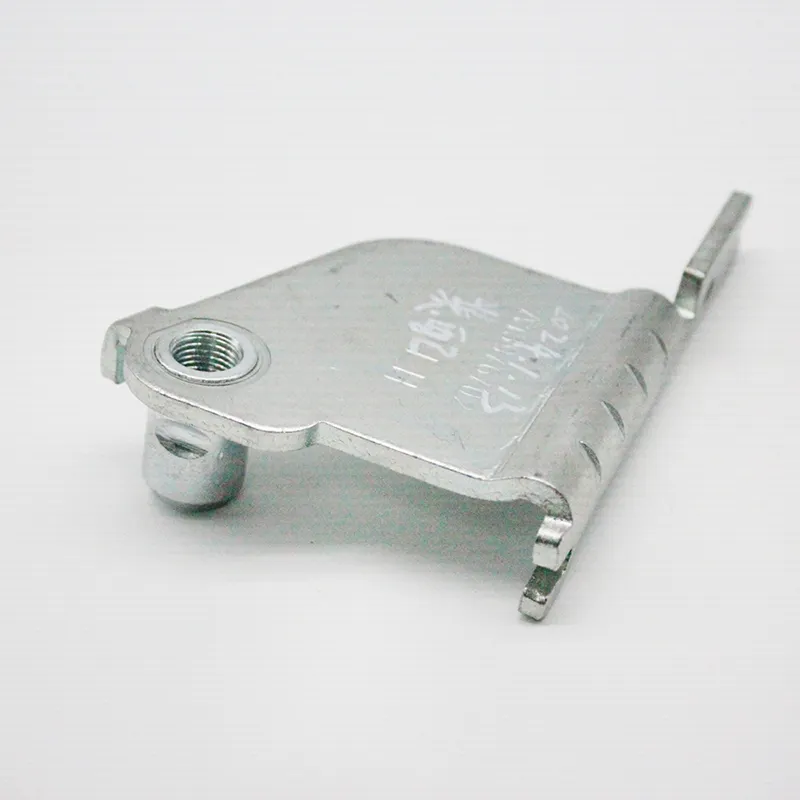
For manufacturers across industries like automotive, agriculture, and home appliances, the question of cost-effectiveness is paramount. When production scales reach thousands or millions of units, every fraction of efficiency matters. This is where custom metal stamping high volume becomes a critical consideration. While the initial investment in tooling may seem substantial, a deeper analysis reveals that this process is not just cost-effective—it is often the most financially prudent strategy for long-term production success.
The Power of Economies of Scale
The core of cost-effectiveness in high-volume stamping lies in economies of scale. The primary expenses in custom metal stamping are the tooling and die creation—one-time, upfront investments. As production volume increases, these fixed costs are distributed across a greater number of parts, causing the per-unit contribution of tooling to diminish significantly. This makes custom metal stamping high volume the superior choice for long-run projects. When volumes reach a certain threshold, the fixed costs become negligible relative to the total output, leaving exceptionally low per-unit variable costs that drive long-term affordability.
Maximizing Material Utilization
In metal fabrication, material costs often represent the largest portion of the final product expense. High-volume stamping processes utilize progressive dies that can arrange parts in a strip with incredible precision. At HRB Industries, engineering teams focus on optimizing part nesting to minimize scrap, ensuring that every square inch of raw material is used effectively. Furthermore, because the process is automated and consistent, there is virtually no material waste due to operator error. This contrasts sharply with lower-volume methods like laser cutting or machining, where material utilization is often less efficient. Over a high-volume run, the cumulative savings on raw material alone can be substantial enough to offset the initial tooling investment.
Automation-Driven Labor Efficiency
One of the hidden costs in manufacturing is labor variability. High-volume custom metal stamping leverages automation to reduce manual intervention. Once a progressive die is set in a press, the operation runs with minimal oversight. Companies like HRB Industries integrate additional automated processes—such as sensor-based quality checks and robotic stacking—directly into the stamping line. This reduces reliance on direct labor and minimizes the risk of inconsistency associated with manual handling. For clients, this translates to predictable production schedules and a supply chain that is less vulnerable to labor shortages or fluctuations in operational pace.
Uncompromising Consistency and Quality Control
Cost-effectiveness is not just about low per-unit cost; it is about predictability. A single defective part can halt an assembly line, causing delays and disrupting downstream operations. High-volume stamping using properly maintained dies and presses—such as those in ISO-certified facilities—ensures that the first part is identical to the millionth part. This repeatability drastically reduces defect rates. By maintaining a near-zero-defect environment, manufacturers avoid the hidden costs of rework, sorting, and warranty claims. When you factor in the cost of operational interruptions, the reliability of high-volume stamping adds a significant layer of financial protection.
Supply Chain Simplification Through Consolidation
Managing multiple vendors for different components adds administrative overhead, shipping complexity, and quality variability. High-volume metal stamping often allows manufacturers to consolidate multiple parts into a single, more complex component. A progressive die can perform several operations—blanking, forming, piercing, and coining—in one stroke. This means what might have required several fabricated pieces can be reduced to one stamped component. By simplifying the supply chain and reducing the number of parts to manage, companies can lower logistics costs, reduce inventory complexity, and streamline final assembly. Partners like HRB Industries also offer value-added services such as assembly and finishing, delivering ready-to-install components that simplify client operations.
Evaluating Total Cost of Ownership
To truly answer the question of cost-effectiveness, one must look beyond the unit price and evaluate the Total Cost of Ownership (TCO). While low-volume methods like 3D printing or CNC machining offer flexibility and lower upfront barriers, they carry a higher per-unit price that remains consistent regardless of quantity. Conversely, custom metal stamping high volume requires a higher initial investment in tooling but results in the lowest possible TCO once production scales reach the breakeven point. For established products with stable demand, stamping offers the most predictable and lowest long-term financial risk. With over two decades of experience, HRB Industries exemplifies how combining skilled craftsmanship with advanced technology—from sheet metal and CNC machining to casting, finishing, and assembly—minimizes TCO for clients across sectors like home appliances, agriculture machinery, and automotive industries, ensuring that the investment in high-volume tooling delivers value throughout the product lifecycle.

