
 EN
EN
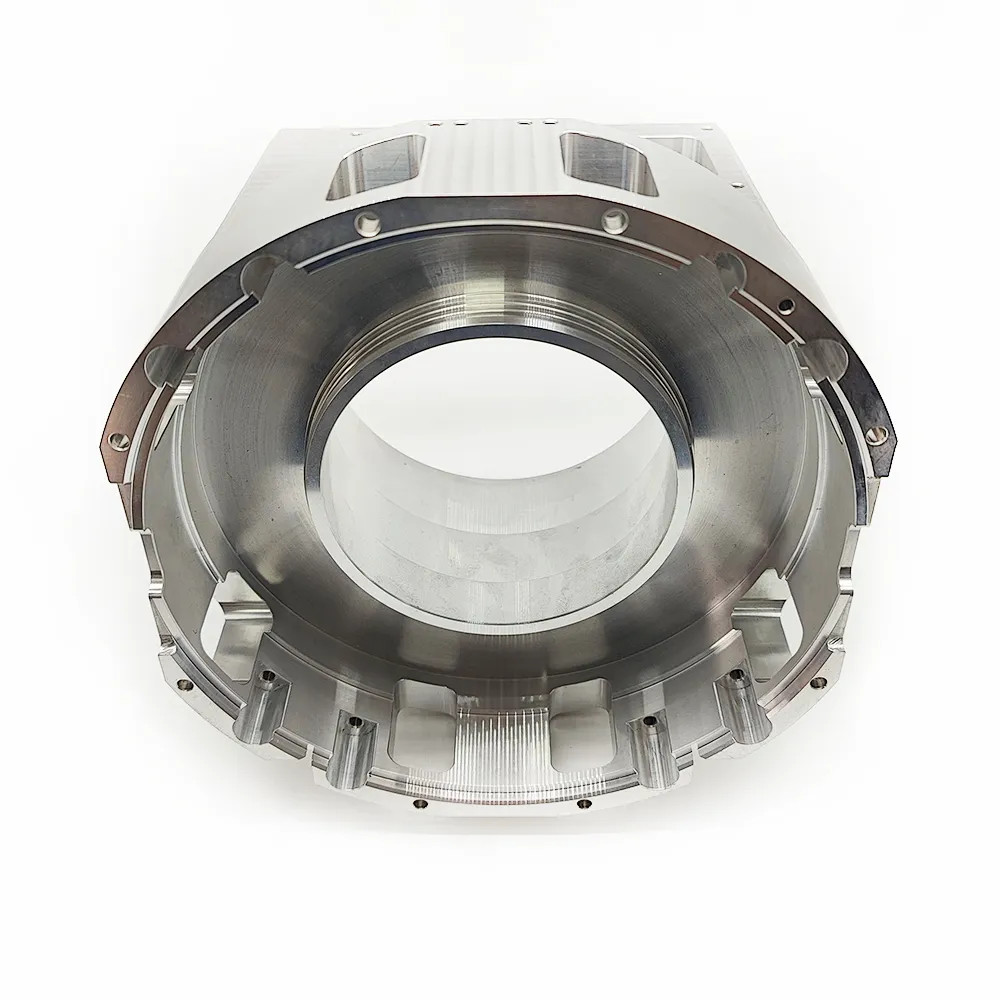
A Definitive Answer to Can CNC Machining Handle Composite Materials?
The short answer to Can CNC Machining Handle Composite Materials? is a resounding yes, and modern manufacturing expertise has turned this capability into a precise, scalable process—one that HRB Industries has mastered over 25 years of custom metal fabrication and multi-process integration. CNC machining composites is no longer a niche skill but a core manufacturing practice for producing high-performance components across home appliance, agricultural machinery, and automotive industries. Composites, with their superior strength-to-weight ratio and corrosion resistance, pair seamlessly with metal parts in modern product design, and CNC machining unlocks the ability to shape these advanced materials with the same precision as traditional metals. At HRB, we integrate cnc machining composites into our end-to-end manufacturing workflow, combining it with sheet metal stamping, casting, and assembly to deliver hybrid components that meet the rigorous demands of global OEM/ODM partners like Electrolux and John Deere. What makes this possible is not just advanced CNC machinery, but a deep understanding of composite material properties and process optimization—foundations that have made HRB a trusted partner for precision components from oven hinges to agricultural equipment parts.
Core Technical Considerations for CNC Machining Composites
Success in cnc machining composites hinges on addressing the unique challenges of composite materials, which differ drastically from metals in their physical and mechanical properties. Composites are anisotropic (their strength varies by direction) and heterogeneous (blending rigid fibers like carbon or glass with flexible resin matrices), making them prone to defects like delamination, fiber pull-out, and thermal damage during machining. Unlike metal, which machines into uniform chips, composites produce powdery cuttings that accelerate tool wear, and their low thermal conductivity traps heat, risking resin melting or charring. For HRB’s engineering team, these challenges are mitigated through targeted process design: we use polycrystalline diamond (PCD) and diamond-coated tools— the industry gold standard for cnc machining composites—to minimize wear, and optimize cutting parameters (high speed, low feed rate) to reduce cutting force and heat buildup. We also employ a small-cut, multi-pass strategy for layered composites to eliminate delamination, a critical defect for load-bearing components like appliance hinges and agricultural machinery parts. These technical choices are not arbitrary; they are rooted in decades of testing and collaboration with material science experts, ensuring that cnc machining composites at HRB produces components with zero dimensional error and consistent structural integrity.
HRB’s Specialized Expertise in CNC Machining Composites
HRB’s 25 years of industry experience (1998–2025) has forged unrivaled expertise in cnc machining composites, built on our core strength of fusing high quality with cost efficiency in custom manufacturing. Our team of dedicated engineers and Black Belt quality specialists combines skilled craftsmanship with state-of-the-art CNC technology, including 5-axis machining centers that enable multi-angle positioning for complex composite shapes—eliminating tool interference and reducing material waste. What sets our cnc machining composites practice apart is our multi-process integration: we don’t just machine composite parts—we integrate them with precision-stamped metal components, finish them to industry standards, and assemble them into final products, all under one roof (2600 ㎡ manufacturing facility). This end-to-end approach streamlines production for our partners, eliminating the need for multiple suppliers and reducing lead times. Our expertise extends beyond machining itself: we offer full engineering support for composite-metal hybrid design, helping clients optimize part geometry for cnc machining composites and ensure compatibility with existing metal manufacturing processes. This holistic expertise has made us a “Best Supplier” nominee for a global appliance leader, a testament to our ability to deliver cnc machining composites solutions that balance performance, precision, and cost.
Quality Control: The Backbone of Reliable CNC Machining Composites
Trust in cnc machining composites is built on uncompromising quality control, a pillar of HRB’s manufacturing philosophy that has earned us ISO 9001:2008 certification and a track record of delivering over 38 million products with 0 PPM (parts per million) defects—including composite-metal hybrid components like oven hinges. Our Black Belt quality team leverages AI vision systems and real-time process monitoring to oversee every step of cnc machining composites, from raw material inspection to final dimensional verification. We test every composite component for structural integrity, ensuring no delamination or fiber damage, and validate all machining processes through PPAP (Production Part Approval Process) to meet the strict standards of automotive and appliance industry partners. This level of quality control is non-negotiable for cnc machining composites, as composite defects are often hidden and can compromise product safety—especially for critical components like agricultural machinery parts and automotive hinges. At HRB, our quality systems turn cnc machining composites from a high-risk process into a predictable, reliable one.
Automation Boosts Efficiency in CNC Machining Composites
Automation is the game-changer for scaling cnc machining composites without sacrificing precision, and HRB has led the way in integrating automated systems into composite machining workflows—with transformative results for our clients. Our newly patented European fully automatic hinge assembly line, a cornerstone of our automation strategy, cuts labor costs by 60% and pairs seamlessly with automated cnc machining composites to produce oven hinges at a rate of 10,000 units per day. In our oven hinge manufacturing, automation has reduced cnc machining composites unit costs by 41%, accelerated design freeze by 63%, and cut part rejections by 90%—all while maintaining ISO-certified quality. We use automated tool changers and CNC program libraries to standardize cnc machining composites for high-volume production, ensuring consistent results across thousands of parts, and AI-driven process optimization to adjust cutting parameters in real time, eliminating human error. For our North American and global partners, this automated cnc machining composites capability means faster time-to-market, lower per-unit costs, and scalable production—whether for 1,000 custom agricultural components or 1 million appliance hinges. HRB’s automation investments prove that cnc machining composites can be both high-precision and high-volume, a balance that was once considered unattainable in advanced manufacturing.
Real-World Applications of CNC Machining Composites at HRB
The true value of cnc machining composites is seen in its real-world applications, and HRB has deployed this technology to produce critical components for three core industries: home appliances, agricultural machinery, and automotive. For home appliance leaders like Electrolux and Frigidaire, we use cnc machining composites to create lightweight, durable oven hinges that combine composite reinforcement with metal structural parts, improving hinge performance while reducing weight. For agricultural machinery giant John Deere (and Yetter Farm Equipment), our cnc machining composites produces corrosion-resistant agricultural equipment parts that withstand harsh outdoor conditions—outperforming all-metal parts in weight and longevity. For automotive partners like Lordstown Motors and Yokohama, we machine composite components for vehicle interiors and undercarriages, leveraging cnc machining composites to meet strict automotive weight and safety standards. In every application, we customize cnc machining composites to the client’s exact dimensional requirements, producing bulk quantities that fit seamlessly into their production lines. Our global partner network—spanning Foxconn, Beko, and Kenmore—attests to the versatility and reliability of our cnc machining composites capabilities, as we adapt our process to meet the unique needs of each industry and each client. At HRB, cnc machining composites is not just a manufacturing process; it’s a solution for building better, more efficient products across the modern industrial landscape.
Table of Contents
- A Definitive Answer to Can CNC Machining Handle Composite Materials?
- Core Technical Considerations for CNC Machining Composites
- HRB’s Specialized Expertise in CNC Machining Composites
- Quality Control: The Backbone of Reliable CNC Machining Composites
- Automation Boosts Efficiency in CNC Machining Composites
- Real-World Applications of CNC Machining Composites at HRB

